Indigenous Tibetan & Bön traditions
Geomancy, environmental harmonization and methods for reading the relationship between human vitality, place and unseen conditions.
Ancient calculation. Clear modern guidance.
A Tse Tsi is a Tibetan lifelong astrological calculation. It traces changing karmic conditions from birth through later life — not as fixed fate, but as guidance for meeting each period with awareness, practice and compassion.
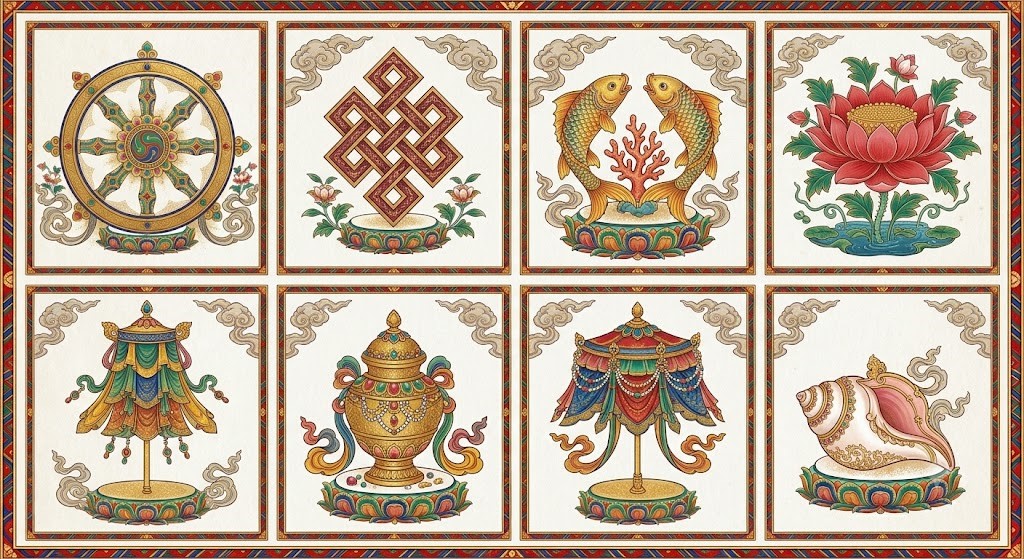
Coming to Kickstarter A founding edition of 100 individually calculated Tse Tsi readings for Western practitioners.
A Tse Tsi can help you recognize demanding periods, understand supportive cycles and choose traditional remedies. For meditators, it offers a long view: a way to align lifelong practice with the changing conditions of one’s own karma.
It is spiritual and cultural guidance, not medical, legal or financial advice — and never a substitute for professional care or personal judgment.
01 · The tradition
Tibetan astrology, or tsi rik, brings together astronomy, elemental relationships and Buddhist understandings of interdependence. It is traditionally practiced alongside Tibetan medicine and used to support wise timing, reflection and remedial action.
Geomancy, environmental harmonization and methods for reading the relationship between human vitality, place and unseen conditions.
The twelve animals, five dynamic elements, nine Mewas and eight Parkhas reveal cycles of change and elemental compatibility.
Sidereal planetary calculation, twelve houses and twenty-seven lunar mansions anchor the reading in measured celestial cycles.
A Buddhist cosmology linking outer cycles, the rhythms of the body and mind, and the path of transformation.
The chart is best understood as a karmic weather map: it describes conditions and probabilities, while leaving room for awareness, conduct and practice to change how they are met.
Our interpretive principle
A different lens
Rather than reducing either tradition to a stereotype, this comparison shows the particular questions a Tse Tsi is designed to answer.
ཚེ་རྩིས།
tshe rtsis · “life calculation”
Using exact birth details, a trained tsipa calculates a natal pattern and a sequence of nine planetary periods. The result brings together temperament, the five personal life forces, sensitive years, supportive days and practices traditionally prescribed to meet obstacles.
The five life forces
These are traditional categories, not clinical measurements. Together they describe how the individual’s energies are understood to function.
Vitality and life force
Body and physical resilience
Capacity, influence and resources
Windhorse, momentum and fortune
Protective presence and integration
02 · A real case, newly presented
This sample re-presents a traditional Men-Tsee-Khang calculation prepared for Stéphane Bertha. The original language is distilled into a clear reading while preserving the chart’s sequence and practical orientation.
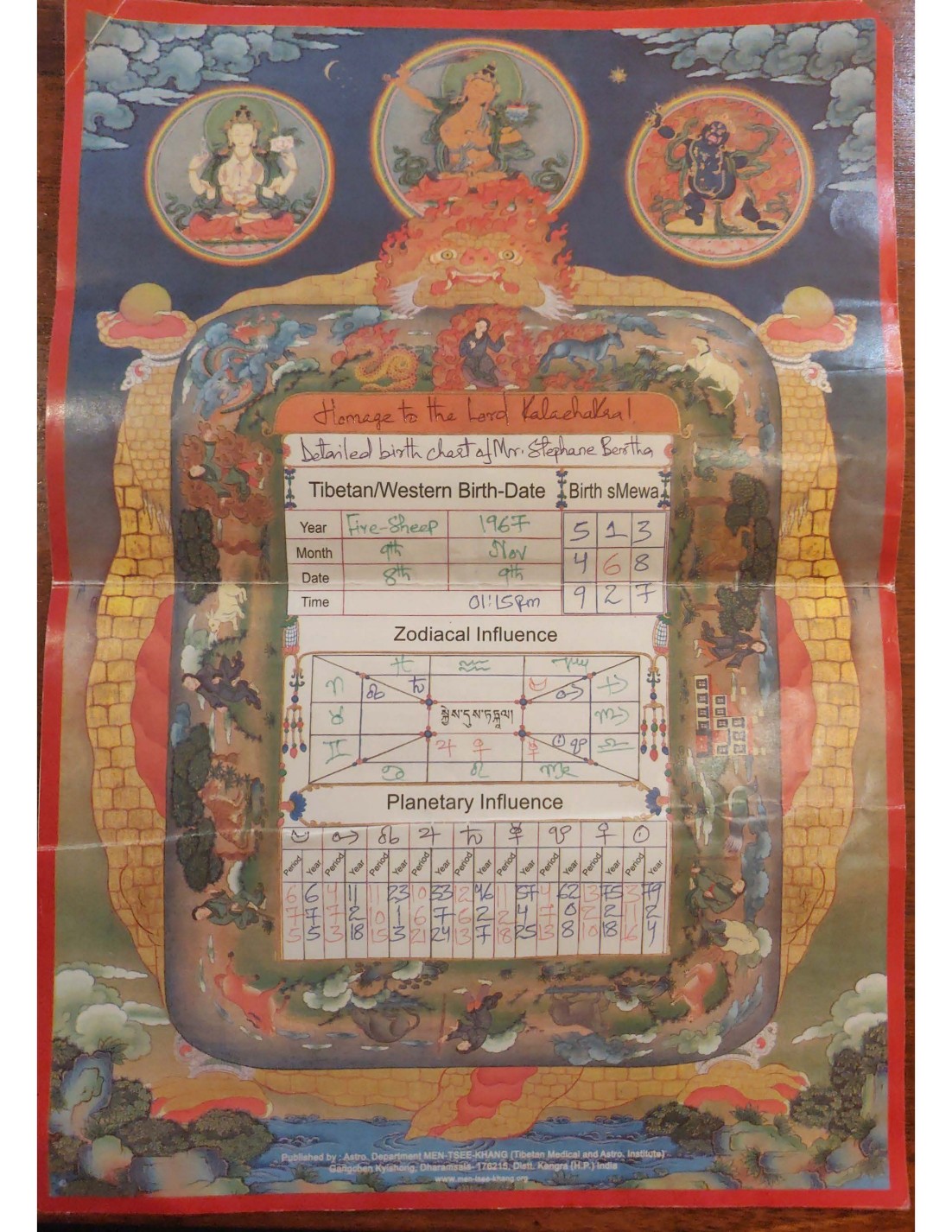
The natal section describes a thoughtful, articulate and creative temperament. Progress is linked less to effortless luck than to sustained effort, ethical conduct and the support of wise mentors.
The nine-period life sequence
Age 46 years, 2 months to 57 years, 4 months
A constructive phase for work and initiative, with supportive relationships. Financial growth is described as steady rather than rapid, inviting care with resources.
The period ending near age 79 is a traditional astrological horizon in this source chart. It is not a medical prognosis or a prediction of the date of death.
Reading the turning points
The source identifies ages 25, 31, 35, 37, 46, 49, 50, 61, 70, 73 and 78 as periods calling for added care. The modern presentation frames them as moments for preparation — not reasons for fear.
Weekly rhythm
Monday and Friday are described as supportive days for important activity. Thursday calls for extra preparation and steadiness. Other days are treated as neutral.
To Chos · remedial practice
A reading is not complete at diagnosis. Traditional remedies invite ethical and contemplative responses to difficult conditions.
Tshe thar: saving animals from slaughter and acting to preserve life.
Sang: juniper smoke offering, performed with proper guidance and intention.
Charitable giving and offerings to monastics, elders, people in need and religious communities.
Dietary care, patience, generosity and protective practices appropriate to the person.
03 · The first 100
Ask a Tsipa is preparing 100 individually calculated Tse Tsi readings for an upcoming Kickstarter. Each calculation will follow the traditional system taught at Men-Tsee-Khang and be presented in accessible, contemporary English.